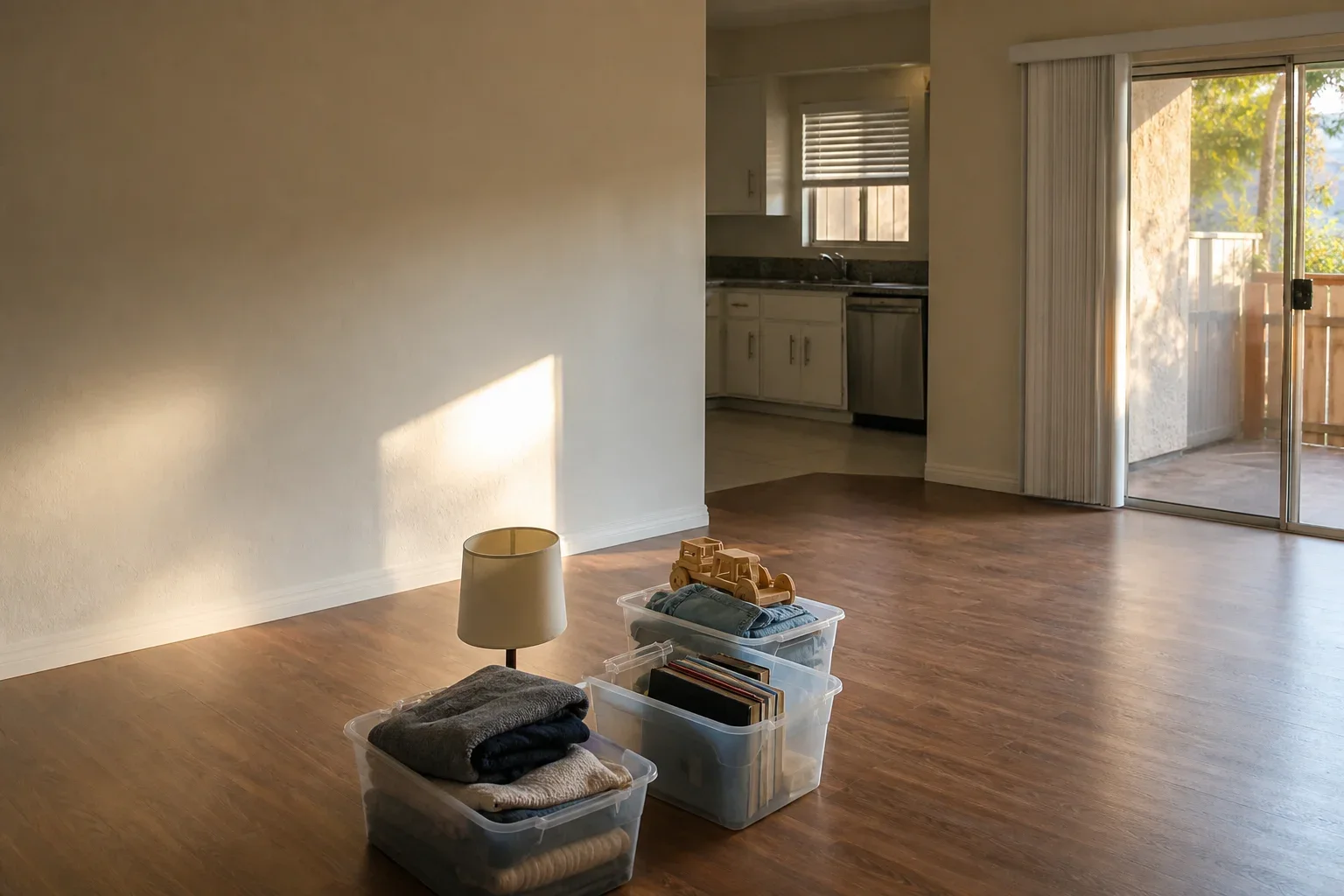
When a tenant leaves belongings behind, do not immediately discard them or treat them as a security-deposit deduction. California landlords generally must inventory the items, make reasonable efforts to contact the former tenant, provide a written Notice of Right to Reclaim Abandoned Property, and follow storage and disposal rules. Pause turnover, preserve evidence, and keep a dated file of each step.
Confirm How Possession Ended
Property left in a unit does not automatically prove that the tenant abandoned the rental. Before changing locks, removing belongings, or re-renting, review the lease, move-out notice, key return, rent status, inspection history, and recent messages. If the tenant clearly surrendered possession and provided a forwarding address, handle the belongings under California’s abandoned-property rules. If the tenant disappeared while rent remains unpaid, a different notice process may apply.
For suspected abandonment of the rental itself, Civil Code Section 1951.3 generally requires rent to have been unpaid for at least 14 consecutive days and a reasonable belief that the tenant abandoned the premises. The Notice of Belief of Abandonment provides at least 15 days to respond when personally delivered, or at least 18 days when mailed. Because using it incorrectly can create wrongful-eviction risk, consult a qualified California landlord-tenant attorney.
Document the Unit and Items
Before cleaning, repairing, or disposing of anything, photograph the unit from multiple angles and create a specific inventory. Write “black two-door refrigerator” rather than “appliances,” and “three sealed cardboard boxes” rather than “boxes of belongings.”
- Record the date, time, address, and people present.
- Photograph rooms, closets, garages, patios, and storage areas.
- List furniture, electronics, documents, vehicles, tools, medication, and containers separately.
- Note visible damage, odors, pests, leaks, and safety concerns.
- Preserve move-in and move-out inspection records.
For residential tenancies, deposit law also requires photographs in specified circumstances. Beginning April 1, 2025, landlords must photograph the unit within a reasonable time after possession is returned and before repairs or cleaning for which a deposit deduction will be claimed, then photograph the completed work. These images support the deposit file but do not replace the abandoned-property notice process.
Contact the Tenant and Send Notice
Promptly try to reach the former tenant by phone, text, email, and the last known mailing address. Keep screenshots, call logs, returned mail, and responses. Offer a practical pickup appointment, but require reasonable identification or authorization before releasing property. If another person may own an item, such as a roommate, family member, or former partner, do not assume everything belongs to the named tenant.
If the tenant cannot be reached or does not promptly collect the items, send a written Notice of Right to Reclaim Abandoned Property. Describe the property, identify where it can be claimed, explain that reasonable storage costs may apply, and state the deadline. The deadline must be at least 15 days after personal delivery or at least 18 days after mailing. Mail one copy to the vacated premises; if the tenant provided an email address, California law also permits email delivery. Retain the notice, inventory, mailing receipt, and returned envelope.
Store Items Safely
Until the claim period ends, leave the property in the unit or move it to a safe place. Keep valuables, personal records, medication, firearms, and hazardous materials separate from ordinary goods. Do not use, sell, donate, or discard items early; limit access and maintain a chain-of-custody log for transfers.
Seek immediate legal guidance for weapons, controlled substances, biohazards, or suspected evidence of a crime. Storage charges must be reasonable and supported by invoices, labor, space, and dates. When property remains in the dwelling, allowable storage cost is generally based on the fair rental value of the space reasonably required. A former tenant who reclaims property within two days of vacating is not charged storage for property left in the dwelling.
Dispose of Property After the Deadline
The notice must state whether the property will be sold at public sale or is reasonably believed to have a total resale value below $700. Below that threshold, the landlord may keep, sell, or destroy it after the claim deadline without further notice. Make a conservative valuation, particularly for electronics, collectibles, tools, jewelry, and items with unclear ownership.
For property valued at $700 or more, California generally requires a public sale by competitive bidding. Notice must be published in a newspaper of general circulation in the county, with the last publication at least five days before the sale. After storage, advertising, and sale costs, pay remaining proceeds to the county within 30 days; the former tenant or other owner may generally claim the balance from the county within one year.
Keep abandoned-property work separate from turnover and deposit accounting. Cleaning, repairs, and damage charges belong in the security-deposit statement under Civil Code Section 1950.5. For a related checklist, review the move-out cleaning and damage guide for North Hollywood and the San Fernando Valley.
Owner File Checklist
- Proof of possession surrender or evidence supporting suspected abandonment.
- Photographs and itemized inventory.
- Contact attempts, notice, delivery proof, and returned mail.
- Storage location, access log, invoices, and release receipt.
- Valuation worksheet and disposal or public-sale records.
- Separate deposit statement, invoices, and repair photographs.
Rules become fact-specific when surrender is disputed, multiple people claim ownership, or items are hazardous or valuable. Los Angeles and San Fernando Valley owners should use a consistent written workflow and obtain legal advice before an irreversible step.