After a repair is finished, the hardest part is often proving what happened. In Los Angeles rentals, a clear paper trail can prevent tenant disputes about damage, delays, and charges, and it can support habitability-related concerns and insurance paperwork if something escalates. It also helps when tenants request receipts, challenge deductions, or ask why a particular fix was necessary.
This article shares a simple, repeatable documentation standard for every work order. Think of it as your repair file: a small set of records that shows (1) the condition that triggered the repair, (2) what you did, (3) when and how you communicated, and (4) what outcome you achieved.
Why repair documentation matters in Los Angeles
Most disputes start with mismatched stories. “You broke it,” “You did not fix it,” or “The problem was already there” are common themes. A repair file closes the gap by capturing the timeline and the condition before and after work.
It also strengthens the choices you make around health and safety, because it shows you acted reasonably and promptly when the issue is connected to habitability.
Suave’s Repair File checklist (use this for every work order)
Use this as a minimum standard, from a clogged drain to a plumbing replacement. The goal is consistency, not volume.
1) Repair intake, problem proof, and location details
- Date and time of the request (portal submission, call log, email, or text).
- Tenant’s reported issue in their words, plus any follow-up questions you asked.
- Unit and exact location: building, unit number, room, fixture, or area (for example, “kitchen sink drain P-trap,” “hallway smoke detector,” “master bedroom window track”).
- Photo or video at intake if appropriate. Capture condition at the start when possible, not only at the end.
2) Necessity and decision-making notes
- Assessment notes: what the technician observed, likely cause, and whether parts were damaged vs. worn.
- Decision criteria for the chosen solution. Example: “Replace PRV because it will not hold pressure,” or “Service and reseal fittings because leak source is at connection.”
- Alternatives considered only when they affect cost or timeline (for example, “Repair patch vs. full replacement, recommend replacement due to repeated failure”).
- Owner approval record when you require it: date approved, scope approved, and any cost limit.
3) Entry notice and scheduling proof
- Scheduling record: appointment date, time window, and any tenant scheduling constraints.
- Entry notice documentation when applicable. Keep a copy of the notice and proof of how it was served. The notice should include key details such as the date, approximate time, and purpose.
- Any access issues: tenant did not respond, lockbox access used, or work was delayed, along with what you did to resolve it.
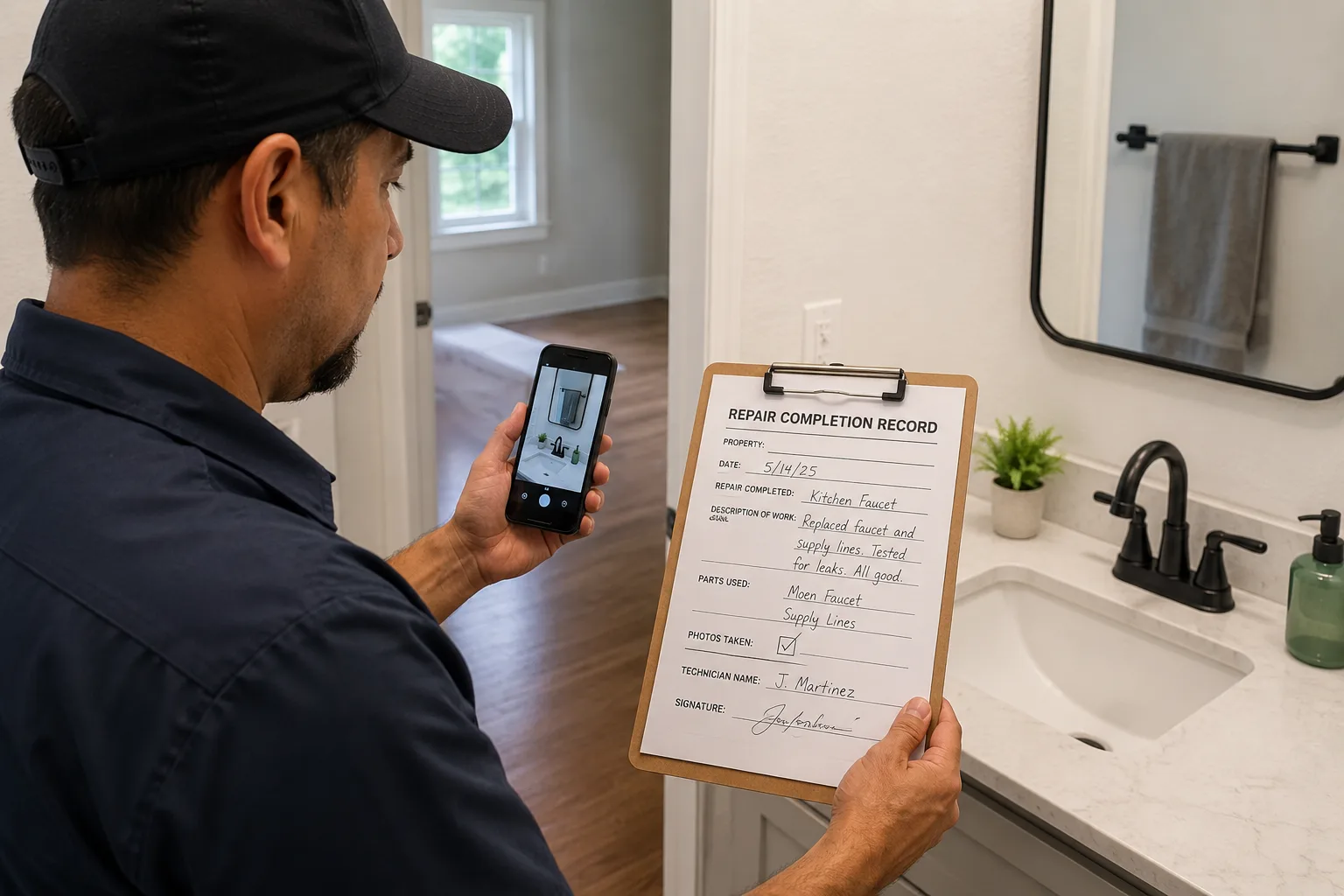
4) Work performed, parts used, and before-after evidence
- Date(s) of service, including repeat visits if troubleshooting was needed.
- Before and after photos tied to the repair scope. Label consistently (for example, “pre-leak at shutoff valve,” “post-replacement valve installed”).
- Parts and materials used: model numbers if available, quantities, and any warranty or product label references.
- Labor notes: what was installed or removed, and any tests performed (water pressure test, drain flow test, electrical function check).
- Cleanup confirmation: what was done to restore the unit and remove debris.
5) Tenant communication, outcome, and close-out
- Close-out message sent to the tenant: what was fixed, when it was fixed, and any “next steps” (for example, how to use a new filter or what symptoms to monitor).
- Warranty or follow-up schedule: when to expect follow-up, how to report issues, and who to contact.
- Outcome confirmation: tenant confirmation when possible, or at minimum an internal verification note (for example, “drain clearing confirmed, no active leak observed after test”).
Good documentation vs. weak documentation
- Weak: “Plumber came and fixed it,” with no intake photos, no invoice detail, and no before-after.
- Good: intake photos of the leak at the specific valve, technician notes identifying the failed component, before-after photos, invoice listing the replacement, and a close-out message confirming the test result.
- Weak: only move-in or move-out photos, with nothing tied to the repair itself.
- Good: repair file includes the condition before repair and the restoration after repair, so timing disputes are harder to sustain.
- Weak: invoice received, but no notes explaining why the repair was necessary.
- Good: invoice plus “necessity notes” that connect the tenant’s report to the technician’s observations and the chosen scope.
What an owner should do next
If you want fewer disputes, implement a consistent file standard now, before you need it. Use this week’s checklist plan:
- Adopt the Repair File checklist as a required work order attachment standard for your property manager or maintenance vendor.
- Assign one internal reviewer to confirm the file includes intake notes, necessity notes, before-after evidence, and close-out communication.
- Create a folder naming rule (example: “Unit-Address-WorkOrderDate-IssueType”) so you can find documentation quickly during deposit disputes or inspections.
- Train your team on what to write: short, factual statements that connect cause to solution and time to communication.
If you manage multiple properties and want this documented approach handled end-to-end, start with a consult so we can align your process with Suave’s residential property management workflows. You can review our services for Residential Property Management Los Angeles, or speak with Property Managers in Los Angeles to set expectations for documentation quality and tenant communication.
Quick checklist recap (save this for work orders)
- Intake: tenant report, exact location, intake photos if possible
- Decision: technician assessment, necessity notes, owner approval if required
- Process: scheduling, entry notice documentation when applicable, access notes
- Proof: before-after photos, parts used, tests performed, cleanup notes
- Close-out: tenant message, outcome confirmation, follow-up/warranty info
Important: This article is general information and not legal advice. If you have a specific dispute or deposit question, consider consulting qualified California counsel or a qualified housing professional. For baseline legal guidance, review the California Civil Code provisions referenced in the sources below.
Related Suave reading: If you want the tenant-facing side of the workflow, review our repair intake and scheduling guidance in our renter repair request workflow article.