A short, documented irrigation walkthrough can help rental owners catch overspray, faulty sprinkler heads, and schedules that no longer fit the season. Review the controller, observe each zone while it runs, and arrange qualified repairs for problems beyond a basic visual check. Tenants can report symptoms, but owners or their landscaping vendors should manage system settings and repairs.
For City of Los Angeles properties served by LADWP, check the utility’s current watering rules before changing a schedule. Its guidance currently limits sprinkler watering to three days a week, restricts watering from 9 a.m. to 4 p.m., and prohibits runoff onto streets and hard surfaces. Rules can differ by water provider, including across the San Fernando Valley, so confirm what applies to the property.
Start With the Controller and Local Rules
Find the controller and record its make, model, active programs, start times, run time for each station, and any rain or soil-moisture sensor settings. If access is restricted or the controller is unfamiliar, ask the landscaping or irrigation vendor to review it rather than guessing at settings.
Check whether the program waters during a permitted window and on permitted days. In Los Angeles, LADWP says standard sprinkler systems are limited to one cycle of up to eight minutes per station on an allowed watering day. Its rules distinguish systems with water-conserving nozzles, so do not assume a different limit applies without confirming the equipment and current guidance.
Then compare the schedule with actual site conditions. A shaded planting bed, a sunny lawn, and drip-irrigated shrubs may need different schedules. Look for programs left over from a hotter period, unnecessary duplicate start times, or watering that continues during or soon after rain.
Walk Each Zone While It Runs
Run one zone at a time so you can see where water is going. Walk the full area, note visible defects, and avoid adjusting unfamiliar valves, wiring, or buried components. Check for:
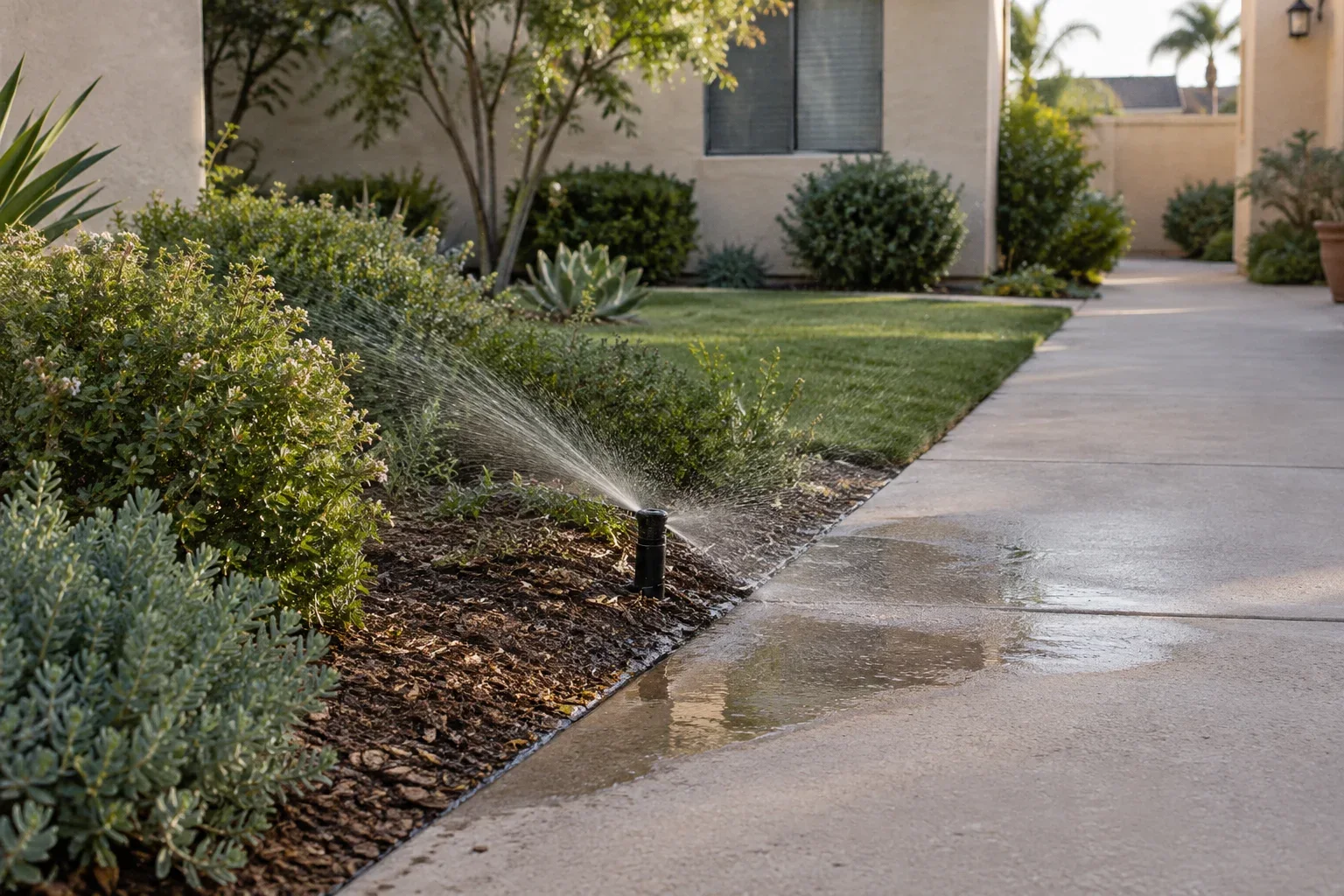
- Spray hitting sidewalks, walls, windows, fences, or parked cars instead of plants.
- Heads that are tilted, clogged, broken, or failing to rise or retract properly.
- Drip tubing that is disconnected, damaged, or leaking at a fitting.
- Pooling, persistently soggy soil, unusually green patches, or water appearing between scheduled cycles.
- Runoff toward a driveway, street, neighboring property, or building.
Mark the location of each issue and identify the zone if possible. Do not treat a wet patch as proof of an underground leak, but report it promptly for investigation. The EPA recommends checking for broken equipment, overspray, and pooling, which can signal system problems.
Adjust for Seasonal Conditions, Then Recheck
As weather and plant needs change, review the schedule instead of leaving a peak-season program running all year. Reduce or pause irrigation when conditions allow, while monitoring plants and soil so conservation does not become damaging underwatering. Follow the property’s water provider rules, and ask a qualified vendor to set different schedules for zones with different plants, sun exposure, slopes, or soil.
After a schedule change, watch the landscape over the next few watering cycles. Dry or stressed plants, soggy areas, and runoff are reasons to reassess the settings or have the system checked. A weather-based controller can help adjust watering to local conditions, but it still needs appropriate setup and periodic review.
Route Reports and Keep a Useful Record
Give tenants a simple way to report a broken head, unexplained wet area, or overspray. Ask them to include the location, when they noticed it, whether water was actively flowing, and a photo if practical. They should report symptoms, not open valve boxes or change controller settings.
For an owner or manager, record:
- The inspection date, person completing the walkthrough, and zones checked.
- Controller settings before and after any authorized adjustment.
- Photos or short videos showing the issue and surrounding area.
- Tenant report details, vendor findings, approved work, and completion evidence.
- Any follow-up date to confirm the repair stopped the waste.
This creates a practical record of what rental owners should document and makes irrigation review part of rental property maintenance planning. For vendor work, ask what failed, what repair is proposed, and whether the system was tested afterward.
Separate Water Waste From an Emergency
Overspray, a clogged head, or a schedule that needs seasonal adjustment is generally a maintenance issue to route to the responsible manager or irrigation vendor. Uncontrolled water flow, flooding near the building, water entering a unit, or a leak that may threaten electrical safety or property structure needs urgent attention. If it is safe and the shutoff is known, stop the flow while contacting the appropriate emergency vendor or utility. Do not ask a tenant to handle a hazardous or unfamiliar shutoff.
Use the property’s emergency process for urgent leaks, not the routine landscaping queue. For more guidance on triage, see how to distinguish a rental maintenance emergency. Once the immediate risk is controlled, document the cause, repair, and any remaining irrigation follow-up.