
Property Manager vs. Property Management Consultant in Los Angeles: Which Is Right for Your Rental Property?
Owning rental property in Los Angeles can be rewarding, but the operational side of ownership becomes more complicated as a property ages, a portfolio grows, or an owner becomes less available.
At that point, many owners begin looking at professional help. But there is an important question to answer first:
Do you need a property manager, a property management company, or a property management consultant?
These roles can overlap, but they are not necessarily interchangeable.
A property manager is generally involved in the ongoing operation of a rental property. A consultant may instead focus on evaluating problems, developing systems, advising an owner, or helping improve operations without necessarily taking over day-to-day management.
Understanding the difference can help Los Angeles rental property owners avoid paying for services they do not need—or expecting a consultant to perform responsibilities that require ongoing management.
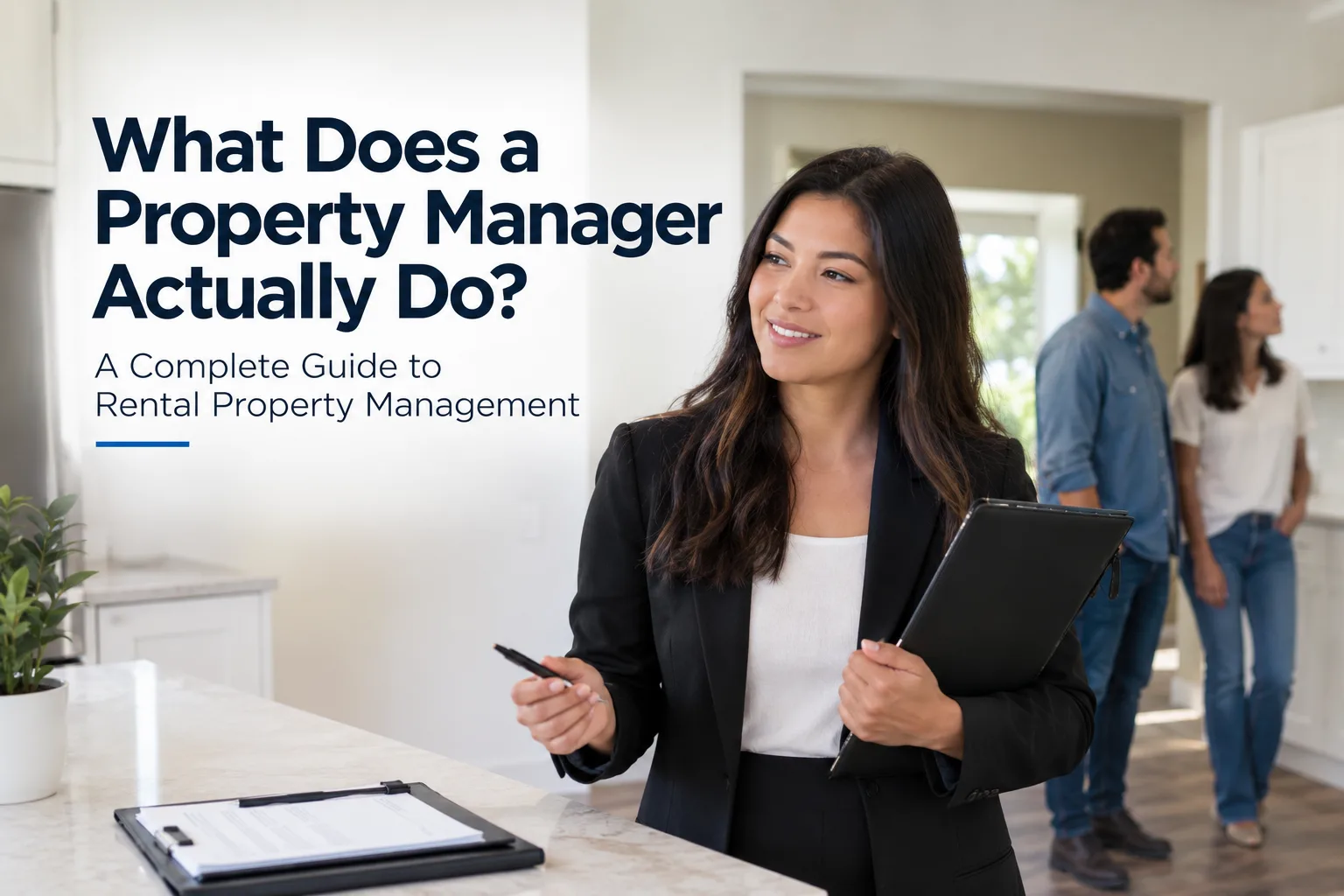
What Does a Property Manager Actually Do?
A property manager is typically involved in the recurring operational responsibilities associated with a rental property.
Depending on the property and management agreement, responsibilities may include:
- Marketing vacant units
- Coordinating leasing activity
- Tenant communication
- Rent collection
- Lease administration
- Maintenance coordination
- Vendor communication
- Property inspections
- Move-in and move-out coordination
- Documentation
- Owner reporting
- Addressing operational issues as they arise
The important distinction is ongoing responsibility.
Property management is not simply giving an owner advice about what should happen. It is about establishing processes and then consistently executing them.
For an owner who does not want to handle tenant calls, coordinate repairs, track leases, monitor rent payments, and manage vendors personally, ongoing rental property management may be the better fit.
What Does a Property Management Consultant Do?
A property management consultant generally takes a more advisory approach.
Rather than assuming responsibility for every recurring management task, a consultant may help an owner understand how a property is operating and identify opportunities for improvement.
For example, a consultant might review:
- Existing management procedures
- Leasing processes
- Maintenance workflows
- Vendor relationships
- Rent collection procedures
- Owner reporting
- Property-level expenses
- Tenant communication systems
- Documentation practices
- Operational inefficiencies
The consultant can then recommend changes or help the owner build a better operating system.
This can be particularly useful for an owner who wants to remain involved but needs professional guidance.
The Biggest Difference: Execution vs. Strategy
One of the simplest ways to understand the distinction is to think about execution versus strategy.
A consultant might tell you:
Your maintenance process is reactive, vendor communication is inconsistent, and there is no standardized follow-up procedure.
A property manager is more likely to be responsible for actually managing that process going forward.
That difference matters.
An owner may know that their property needs better maintenance coordination but still have no interest in receiving repair calls at 8 p.m. or spending the next morning finding a contractor.
Likewise, an owner with an experienced in-house team may not need a full-service property manager. They may instead benefit from an outside professional reviewing their systems and identifying operational weaknesses.
When a Los Angeles Owner May Need a Property Manager
A full property management relationship may make more sense when the owner's primary problem is time, availability, or operational workload.
1. You no longer want to handle tenant communication
Tenant communication can become a significant responsibility.
Questions about maintenance, rent payments, access, leases, repairs, and property conditions can create a constant stream of small tasks.
A property manager can centralize that communication and establish a consistent process.
2. You live outside Los Angeles
Out-of-area ownership creates a practical challenge.
Even relatively straightforward problems can become difficult when the owner cannot easily visit the property, meet a vendor, inspect a condition, or respond to an urgent issue.
Professional rental property management can provide local operational support.
3. Your portfolio is growing
The workload associated with three properties is not necessarily three times the workload associated with one.
As a portfolio grows, owners often encounter more leases, more tenants, more vendors, more maintenance schedules, and more financial transactions.
At some point, management becomes a system rather than a collection of individual tasks.
4. Maintenance is consuming your time
Maintenance coordination involves more than calling a contractor.
Someone has to:
- Receive the request.
- Determine the appropriate response.
- Coordinate access.
- Contact the right vendor.
- Track the appointment.
- Follow up.
- Document the work.
- Review whether the issue was actually resolved.
A property manager can take ownership of that workflow.
5. You want to be an owner rather than an operator
Some investors enjoy managing properties.
Others want to focus on acquisitions, financing, portfolio strategy, and long-term investment decisions.
Neither approach is inherently better.
The question is whether the owner's preferred role is operating the property or owning the investment.
When a Property Management Consultant May Be the Better Choice
Consulting can make sense when the owner already has operational resources but wants a professional outside perspective.
1. You already have an on-site or internal team
An apartment owner may have an on-site manager or maintenance staff but still have questions about whether the property is being operated efficiently.
A consultant can evaluate the existing structure without necessarily replacing it.
2. Your management system needs improvement
Perhaps the property is functioning, but the processes are inconsistent.
Examples might include:
- Maintenance requests being tracked differently by different people
- Poor documentation
- Inconsistent vendor follow-up
- Weak owner reporting
- Disorganized lease files
- Inefficient communication
- No standardized inspection process
A consulting engagement can focus specifically on identifying and correcting those weaknesses.
3. You are preparing for portfolio growth
An owner with one or two properties may want to create better systems before acquiring several more.
Consulting can help answer questions such as:
- What should be standardized?
- Which tasks should be automated?
- Which responsibilities should be outsourced?
- What reporting should an owner receive?
- How should maintenance requests be handled?
- What should the leasing workflow look like?
The goal is to build an operation that can scale.
4. You are evaluating an acquisition
Property management should be considered before—not after—an acquisition.
A property may look attractive financially while presenting significant operational challenges.
Before purchasing an apartment building or rental property, an investor should consider:
- Existing tenant operations
- Maintenance requirements
- Leasing conditions
- Vendor relationships
- Staffing needs
- Administrative workload
- Deferred maintenance
- Management structure
Professional real estate and property-management guidance can help investors look beyond the purchase price.
Property Manager vs. Consultant: A Practical Comparison
| Need | Property Manager | Consultant |
|---|---|---|
| Ongoing tenant communication | Typically yes | Usually advisory |
| Rent collection | Often yes | Usually no |
| Maintenance coordination | Typically yes | May evaluate the process |
| Leasing operations | Often yes | Can advise on strategy |
| Vendor coordination | Typically yes | May review vendor systems |
| Owner reporting | Often yes | May recommend reporting structure |
| Operational audit | Sometimes | Core use case |
| Process improvement | Yes | Yes |
| Portfolio strategy | Sometimes | Often |
| Day-to-day execution | Yes | Usually limited |
| Building a management system | Yes | Yes |
| Replacing an existing management operation | Potentially | Usually not the primary role |
The exact responsibilities depend on the engagement and should always be clearly defined in writing.
What About Hiring a Property Management Company?
There is another distinction worth making.
A property management company is an organization that may provide a broader range of ongoing management services than an individual property manager.
For an owner, the practical question is less about the title and more about the scope of responsibility.
Before hiring a company, ask:
- Who will actually manage my property?
- Who handles tenant communication?
- Who handles maintenance requests?
- How are vendors selected and coordinated?
- How are inspections handled?
- How is rent collection managed?
- What reporting will I receive?
- Who is responsible for lease administration?
- How are emergencies handled?
- What happens when the assigned manager is unavailable?
A professional-sounding service description is not enough.
Owners should understand who does what, when, and how the work is documented.
How to Decide Which Model Fits Your Property
Start by identifying the actual problem.
If the problem is:
“I don't have enough time to manage the property.”
You probably need ongoing property management.
If the problem is:
“I have people managing the property, but the system is inefficient.”
Consulting may be more appropriate.
If the problem is:
“I'm acquiring properties and need help determining how they should be operated.”
A consulting or advisory relationship may be useful before deciding on long-term management.
And if the problem is:
“I want someone else to take responsibility for the daily operation.”
A property management company may be the more logical solution.
Questions Los Angeles Property Owners Should Ask Before Hiring Help
Before signing an agreement, ask prospective providers specific operational questions.
Ask about communication
Who handles tenant communication, and how quickly are requests normally acknowledged?
Ask about maintenance
How are maintenance requests received, assigned, tracked, and closed?
Ask about vendors
Does the company coordinate outside vendors? How are vendors selected and monitored?
Ask about leasing
Who handles marketing, showings, applications, screening, and lease administration?
Ask about financial reporting
What information will the owner receive, and how frequently?
Ask about inspections
How are property conditions documented, and what happens when a problem is identified?
Ask about emergencies
What happens when an issue occurs outside normal business hours?
Ask about accountability
Who is responsible for making sure an issue does not simply disappear into an email inbox?
These questions reveal much more about a management operation than a generic list of services.
The Right Choice Depends on the Owner's Role
There is no universal answer to whether a property owner should hire a manager or consultant.
The better question is:
What role do you want to play in your property's operation?
An owner who wants to remain hands-on may benefit from professional consulting and systems development.
An investor who wants to minimize day-to-day involvement may need full-service rental property management.
An owner with an existing team may need an operational review rather than a complete management transition.
The goal is not to outsource everything simply because outsourcing is available.
The goal is to create an operating structure that matches the property's needs, the owner's objectives, and the level of involvement the owner actually wants.
Final Takeaway
For Los Angeles rental property owners, the distinction between a property manager and a property management consultant comes down largely to responsibility and execution.
A consultant can help you understand what should change.
A property manager can help make sure the necessary work gets done consistently.
Before choosing either option, identify the operational problem you are actually trying to solve. Then evaluate providers based on their processes, communication, maintenance coordination, reporting, leasing capabilities, and accountability—not simply the list of services on their website.
For owners considering professional property management services in Los Angeles, that distinction can make the difference between hiring another layer of administration and building a management system that genuinely reduces the owner's workload.
Suggested Internal Links
- Rental Property Management in Los Angeles
- Tenant Screening Services
- Automated Rent Collection
- Rental Property Maintenance Checklist
- Apartment Building Management
- Real Estate Investment Consulting
- Commercial Property Management in Los Angeles
LinkedIn Companion Article
Property Manager vs. Property Management Consultant: They're Not the Same Thing
A common question I hear from rental property owners is:
“Do I need a property manager, or do I just need help fixing the way my property is being managed?”
Those are two very different problems.
A property manager is generally focused on ongoing execution.
That can include:
- Tenant communication
- Rent collection
- Leasing
- Maintenance coordination
- Vendor management
- Inspections
- Lease administration
- Owner reporting
A property management consultant, on the other hand, is often brought in when the owner needs an outside perspective.
The consultant may evaluate:
- How maintenance requests are handled
- Whether leasing processes are efficient
- How vendors are managed
- Whether documentation is organized
- How owner reporting works
- Where operational bottlenecks exist
- What systems should be standardized
In simple terms:
A consultant can help determine what needs to change.
A property manager can take responsibility for executing the ongoing operation.
That distinction becomes especially important as rental portfolios grow.
An owner with one property and plenty of time may not need full-service management.
An investor with multiple properties, tenants, vendors, leases, and maintenance requests may quickly discover that property management has become a second job.
And an owner who already has an internal team may not need to replace that team at all. They may simply need someone experienced to review the operation and identify what is missing.
Before hiring a property management company, ask:
- Who actually handles tenant communication?
- Who coordinates maintenance?
- How are vendors selected?
- How are repairs tracked through completion?
- What does the owner reporting look like?
- Who handles leasing?
- How are inspections documented?
- What happens during an emergency?
- Who is accountable when something falls through the cracks?
Those answers tell you far more than a generic “full-service property management” label.
For property owners, the objective shouldn't simply be to outsource work.
It should be to build an operating system that protects the property, reduces unnecessary friction, and allows the owner to spend their time where it creates the most value.
The right question isn't always “Who should manage my property?”
Sometimes it's:
“What part of my property operation actually needs to change?”
That is where the distinction between property management and property management consulting becomes important.