Utility billing works best when responsibility, calculation methods, and payment timing are clear before move-in. First determine whether each service is individually metered, master-metered, or shared. The lease should then identify who opens the account, how charges are allocated, when bills are delivered, and how disputes are handled. “Tenant pays utilities” is often too vague for water, sewer, trash, solar, and shared systems.
Start With a Utility Responsibility Map
Create a property-specific schedule listing every service and assigning responsibility for the account, payment, and transfer at move-in and move-out.
- Tenant-managed accounts: Separately metered electricity, gas, water, or other services placed directly in the tenant’s name.
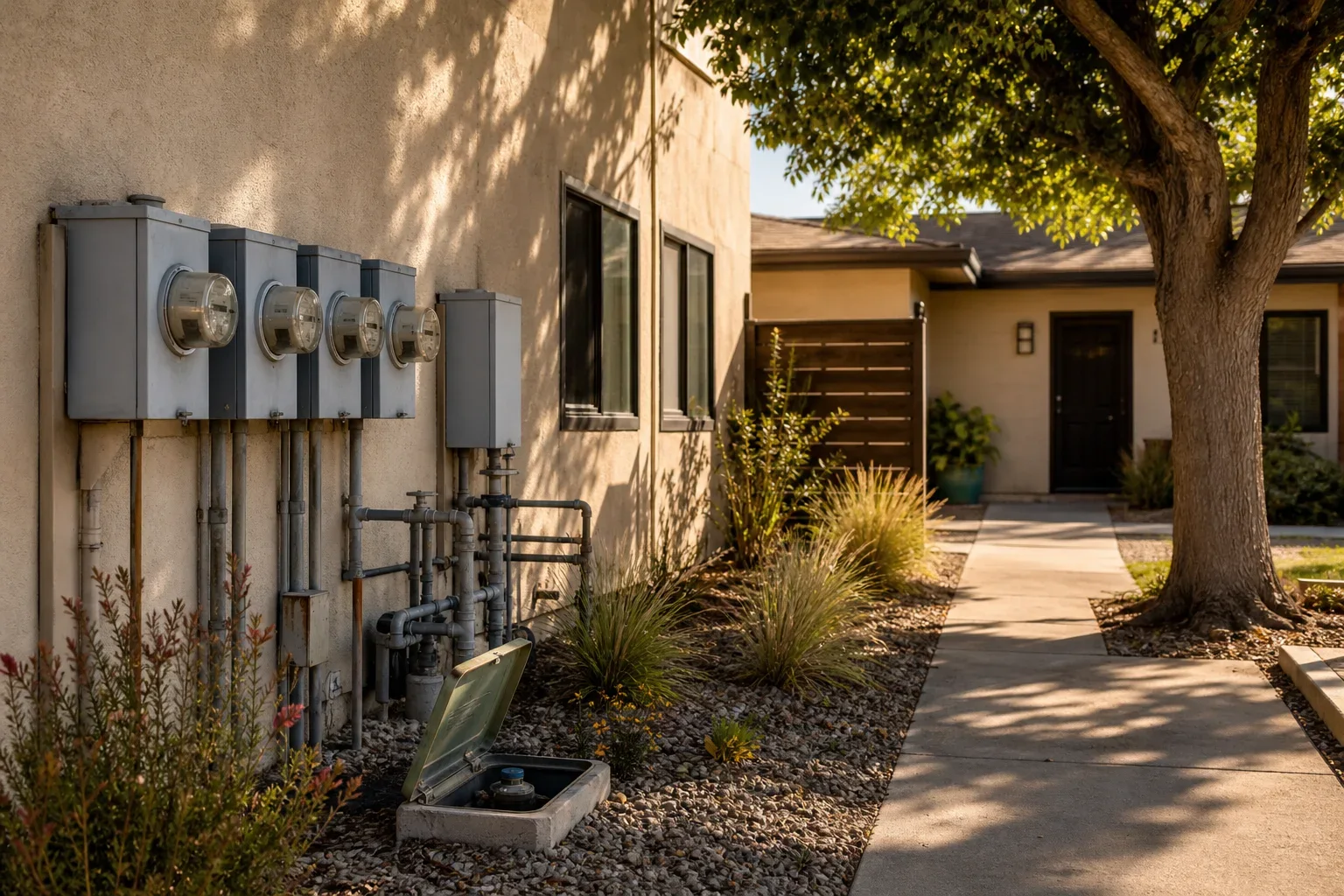
- Owner-managed accounts: Master-metered, shared, or common-area services that remain in the owner’s name.
- Shared or variable services: Water, sewer, trash, irrigation, solar, battery storage, and time-of-use electricity.
At move-in, record meter numbers, beginning readings, transfer confirmation, and the possession date. At move-out, obtain final readings and confirm when the tenant’s account ends. Neither party should assume a transfer is complete without provider confirmation.
Write the Lease Around the Actual Billing Method
State each charge separately and identify whether the tenant pays the provider, reimburses the owner, or pays a fixed amount included in rent. For shared charges, explain the allocation formula in plain language and provide an example when needed.
The utility clause should cover the services and account-opening responsibility; billing period, delivery method, due date, and lawful late-charge process; allocation of shared costs; partial months, move-ins, move-outs, and vacant periods; and treatment of estimated bills, corrections, credits, solar production, and rate changes. Identify where tenants can ask questions and how supporting records will be provided.
Do not add a reimbursement charge during an existing tenancy unless the lease and applicable law allow it. Before changing an included-utility arrangement, obtain California-specific legal advice.
Master Meters, Submeters, and Shared Water
Master-metered properties require additional administration because the owner remains responsible for the utility account while recovering permitted costs. California law has detailed requirements for water submetering, including disclosures, bill contents, reading dates, record access, leak investigations, and limits on certain fees and penalties.
Water-submeter bills should show beginning and ending readings, reading dates, consumption, rates, fixed charges, prior balances, due date, and a contact process. Tenants may request the data used to calculate a bill, including the property water bill, units included in the formula, and allocation method. Keep these records in a consistent digital file.
For shared water without individual submeters, use a reasonable, consistently applied formula stated in the rental agreement. Factors may include equal shares, occupancy, unit size, or another physical factor reflecting the service. Do not change formulas merely to increase recovery. Handle trash and similar charges consistently, identifying whether recovery is based on an invoice or fixed charge.
Electric and gas submetering present separate compliance issues. California rules generally require itemized billing and limit charges to the rate that otherwise would apply through the utility. Review the serving utility’s tariff and consult qualified counsel before installing submeters, allocating solar, or converting utilities-included rent.
Build a Reliable Monthly Billing Workflow
Each cycle, save the provider invoice, readings, occupancy data, allocation worksheet, credits, and tenant bill. Reconcile resident charges to the property invoice. Do not pass through an owner-caused late fee, reconnection fee, or unsupported administrative expense.
For an unusually high bill, check leaks, irrigation, faulty fixtures, rate changes, estimated readings, vacant-unit usage, and solar-production changes before demanding payment. California water-submetering rules also require investigation of abnormal usage and attention to qualifying leaks or system problems.
This recordkeeping is part of what rental owners should document in Los Angeles and supports rental property maintenance planning in Los Angeles, especially for leaks, irrigation, water heaters, submeters, and solar equipment.
Handle Disputes and Vacant Units Carefully
When a tenant disputes a charge, acknowledge the issue in writing, identify the billing period, and provide the calculation, source invoice, readings, and allocation formula. Correct errors promptly. If the bill appears accurate, explain why rather than simply stating that the tenant owes it.
- Pause collection of the disputed portion while reviewing records when practical.
- Inspect suspected leaks or equipment problems and document access attempts.
- Keep undisputed rent and utility amounts separately identified.
- Never threaten to shut off essential services to pressure payment.
- Get legal guidance before using disputed charges in a notice or deposit deduction.
Before possession, confirm lease language, account contacts, transfer instructions, readings, and required disclosures. During vacancy, state who pays minimum fees, common-area consumption, and security-related usage. At turnover, take final readings, close or transfer accounts, reconcile partial periods, and retain invoices with the move-out accounting.
For Los Angeles and San Fernando Valley owners, the safest approach is to choose one method that fits the property, disclose it before signing, apply it consistently, and keep records that reproduce every charge. California requirements can depend on the service, meter configuration, local requirements, and lease language, so have qualified California housing counsel review unusual arrangements.