Why Los Angeles and the San Fernando Valley need a tighter maintenance rhythm
In Los Angeles and the San Fernando Valley, maintenance issues can escalate quickly. Heat can stress HVAC systems, wildfire smoke season increases filtration demands, and humidity pockets can accelerate microbial growth if condensate drains are slow or blocked. Dryer vents are a common weak point, because lint buildup can restrict airflow and contribute to overheating risks. The National Fire Protection Association (NFPA) highlights dryer safety steps that focus on reducing lint and keeping airflow clear.
This article gives property owners, investors, and tenants a maintenance plan you can schedule and track, with clear inspection intervals for dryer vents and core HVAC components: air filters, evaporator coils, and condensate lines.
Core maintenance schedule, with Los Angeles season timing
Use this as a baseline. Always defer to your system manufacturer guidance, building requirements, and any HOA rules. For multi-family properties, consider tailoring based on occupancy density, pets, laundry frequency, and allergy or smoke sensitivity in the household.
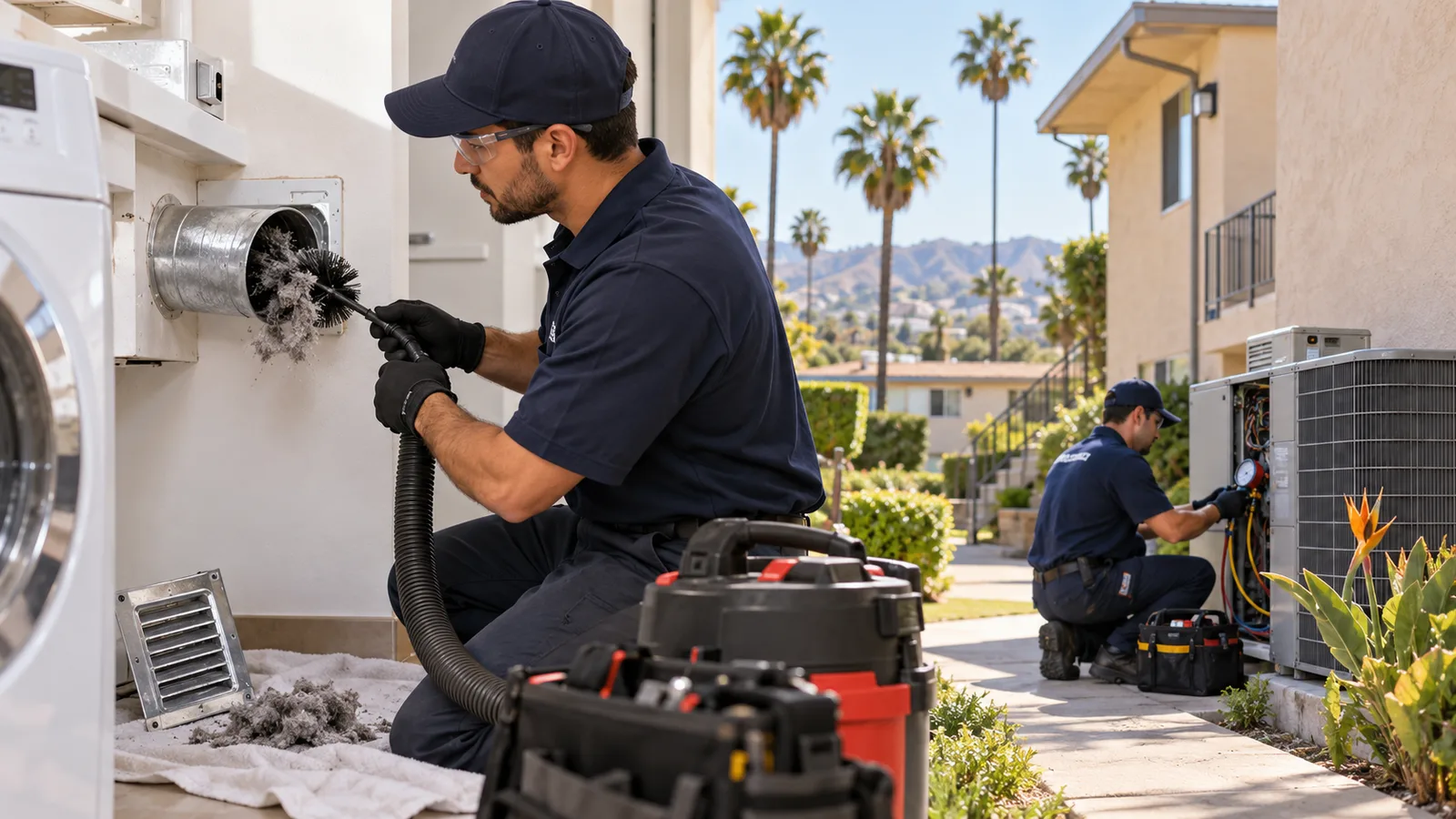
Dryer vent maintenance (lint, airflow, and fire prevention)
- Every month (tenant checklist): Clean the lint screen after every load. Watch for signs of restricted airflow, like longer dry times.
- Every 6 months (property inspection trigger): Inspect the exterior vent flap for obstruction and verify proper airflow during operation.
- At least once per year (professional cleaning): Schedule professional dryer vent cleaning to remove lint buildup inside the vent run.
NFPA dryer safety materials emphasize cleaning lint and keeping the airflow system clear to reduce the risk of dryer-related incidents.
HVAC air filters (airflow, indoor air quality, and equipment protection)
- Check every 30 days during heavy use.
- Replace every 1 to 3 months as a typical target. In LA, dust loads, wildfire smoke events, and higher runtime periods can justify more frequent changes.
- Wildfire smoke season (event-driven action): Plan ahead with the right filtration. Los Angeles County and federal guidance commonly recommend considering higher-efficiency filtration options during smoke periods.
The EPA and other energy and HVAC guidance commonly reference filter maintenance, and ENERGY STAR resources provide homeowner-facing maintenance reminders.
Evaporator coils and condensate lines (mold prevention and drip-free performance)
- Cooling season start (early spring): Inspect evaporator coils and verify drainage.
- Once per year (best practice): Service the condensate drain system to reduce standing water and microbial growth risk in the drain pan and related components.
- During repeated call-backs: If tenants report water dripping, musty odors, or overflow trips, schedule an earlier drain and coil inspection.
ASHRAE guidance on indoor moisture control emphasizes preventing standing water and limiting conditions that support microbial growth in condensate-related components.
Leasing and resident communication checklist, before HVAC and dryer season
Maintenance is easier when residents know what to expect. Give your leasing team a short, repeatable script and a date-based reminder.
Send these messages 3 to 4 weeks before cooling season and dryer-heavy months
- Dryer vent reminders: “Clean the lint screen after every load. If clothes take longer than usual or you notice burning smells, submit a maintenance request immediately.”
- HVAC filter reminders: “Check your system schedule. If you experience unusual odors, reduced airflow, or visible dust buildup, request a filter inspection.”
- Water safety signs: “If you see water pooling near indoor units or hear overflow alarms, stop using the unit and contact maintenance.”
Timeline template for property teams
- Week 1: Confirm filter sizes, stock replacement filters, and identify units with higher laundry frequency.
- Week 2: Schedule dryer vent cleaning for each building cluster or multi-unit location.
- Week 3: Run HVAC tune-ups focused on coil inspection and condensate drain function.
- Week 4: Follow up with residents, confirm tenant reminders were sent, and log any resident complaints that might indicate drainage or airflow issues.
What maintenance staff should document for audits, repairs, and disputes
Documentation protects owners and improves repair quality. Require consistent records for every dryer vent and HVAC service call.
- Before-and-after photos: Dryer vent connection and exterior vent outlet, visible lint buildup (if present), and access panels opened for HVAC service.
- Component condition notes: Air filter condition (with dust loading observations), evaporator coil condition, and condensate line condition (including drainage continuity tests).
- Measurements when available: Record airflow-related observations (for example, restricted airflow indicators) and note any abnormal equipment behavior.
- Tenant impact: Document any signs reported by residents, like musty odors, longer dry times, or water-related alarms.
- Work performed and parts: List services completed, any parts replaced, and the recommended next service date.
How Suave helps coordinate maintenance across LA and the San Fernando Valley
For owners and investors, the biggest challenge is coordination, not the work itself. Suave Management schedules maintenance windows, funnels tenant requests through a clear communication channel, and helps ensure repairs are documented so you can track preventive efforts over time.
For residents, that means fewer “missed messages,” clearer expectations, and faster response when a dryer vent or condensate issue shows up as a comfort or safety problem.
If you want a property-specific schedule, Suave can align your dryer vent cleaning and HVAC tune-ups to your building layout, occupancy patterns, and upcoming seasonal risks in Los Angeles and the San Fernando Valley.
Quick reference: your maintenance plan at a glance
- Dryer: Clean lint screen after every load, inspect exterior vent flap every 6 months, professional vent cleaning at least annually.
- HVAC filters: Check every 30 days, replace every 1 to 3 months, use event-driven actions during wildfire smoke season.
- Coils and drains: Inspect evaporator coils and condensate drainage at least annually, earlier if residents report odors, dripping, or overflow issues.
Reminder: This is educational guidance, not a substitute for manufacturer instructions, building codes, or professional assessments. For urgent safety concerns, contact qualified HVAC and dryer vent technicians immediately.