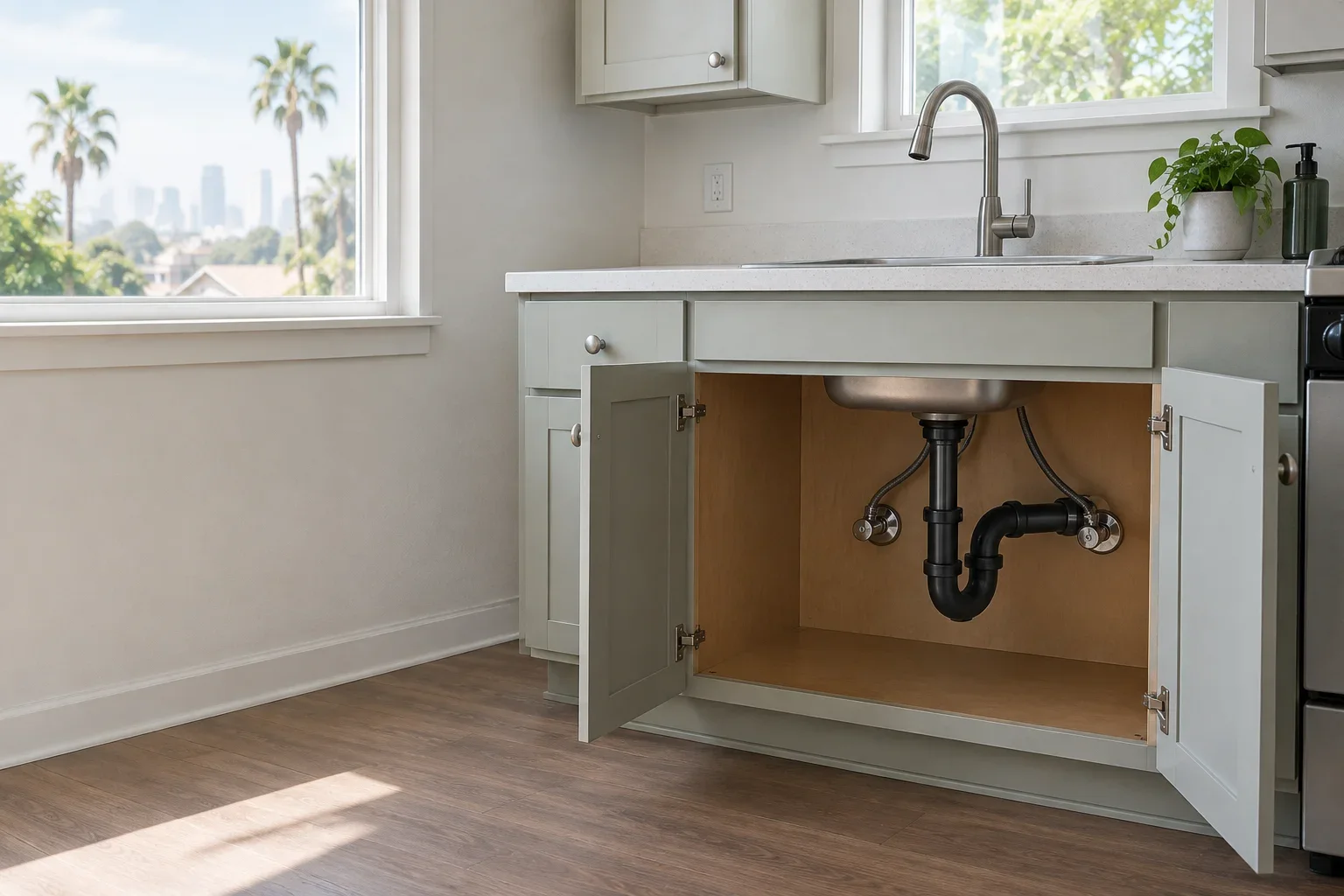
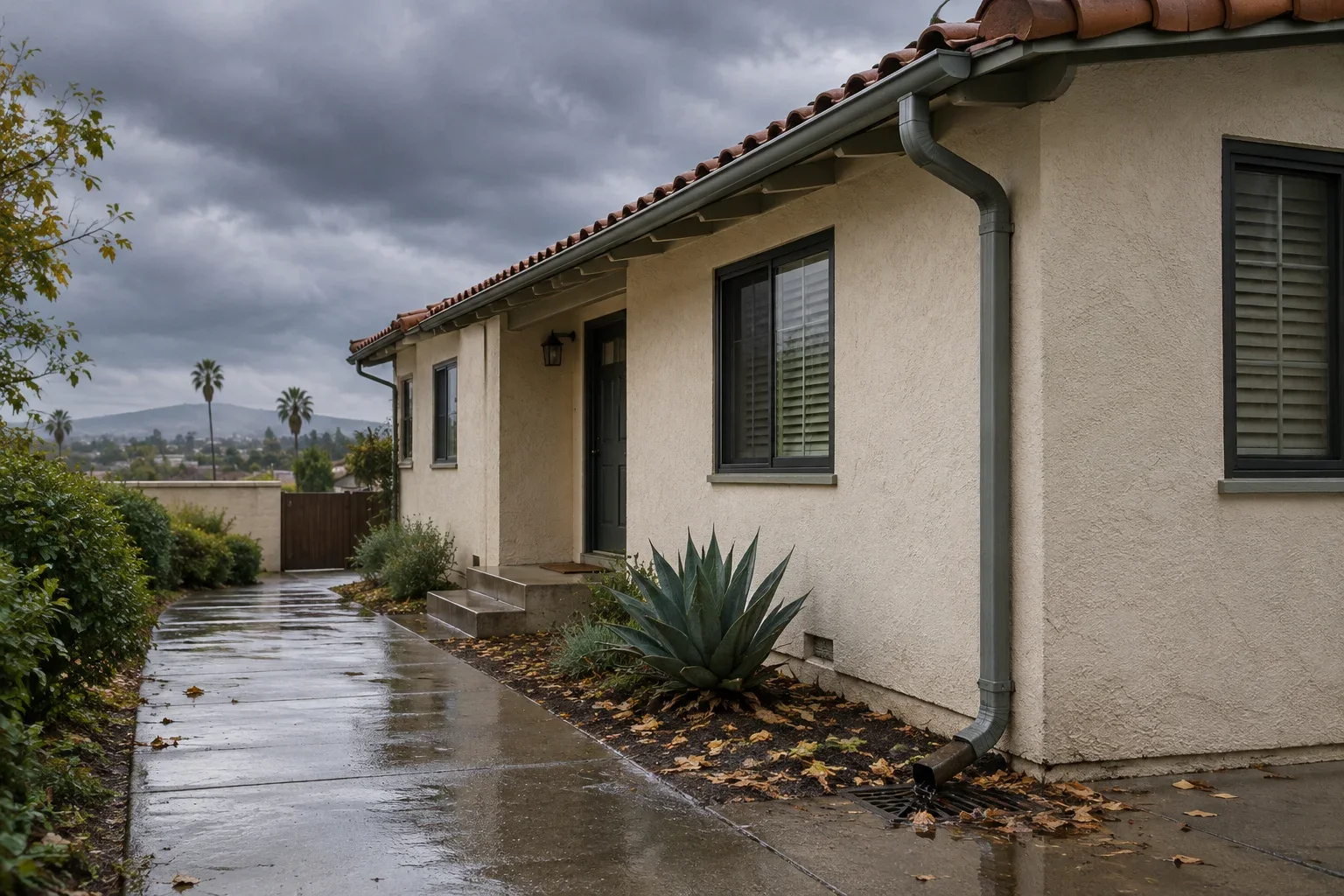
Before a California rainstorm, check what you can safely observe from the ground, clear accessible gutters and drains, secure loose outdoor items, and tell residents how to report concerns. After the rain, document visible changes and assign follow-up repairs. The goal is to reduce avoidable problems and catch maintenance needs early, not to climb onto a wet roof or attempt emergency repairs.
For owners and managers in Los Angeles and the San Fernando Valley, this is a practical form of rental property maintenance planning in Los Angeles: prepare in advance, give residents clear instructions, and keep a record of what needs attention.
Before the Rain: Check the Exterior Safely
Start when conditions are dry and there is enough time to arrange help. Walk the property and look for visible issues from the ground, a safe shared walkway, or another location that does not require climbing. Do not inspect a roof or use a ladder in wet or windy conditions. Leave roof access, repairs, and unsafe work at height to qualified professionals.
- Look at the roofline from the ground. Note visible loose or missing roofing, damaged flashing, sagging areas, or branches touching the roof. A ground-level view cannot confirm the condition of the whole roof, so refer suspected problems to a roofer.
- Check gutters and downspouts where safely accessible. Remove leaves and debris only if the work can be done safely from the ground or another suitable, stable position. Confirm downspouts appear connected and direct water away from entrances and the building, where practical.
- Observe drains and low spots. Look for leaves or other debris covering private yard drains, area drains, and the immediate flow path around the building. Clear accessible debris without entering a drain or handling hazardous material. Report blocked public storm drains to the appropriate local agency rather than attempting to clear them.
- Secure outdoor items. Bring in or tie down lightweight furniture, planters, bins, umbrellas, and other items that could shift in wind or block a drain. Check that gates close and that loose yard debris is picked up.
- Flag known vulnerabilities. Review prior maintenance notes for recurring roof leaks, overflowing gutters, standing water, or drainage concerns. Arrange qualified service before the storm if the issue could worsen.
Los Angeles County preparedness guidance recommends cleaning gutters, downspouts, and storm drains and repairing roof leaks before a storm. Treat that as a prompt to schedule work early, not a reason to take on unsafe access yourself.
Tell Residents What to Expect
Send a concise message before forecast rain, especially when residents need to move belongings or know how to report a problem. Include the expected preparation, the best contact method, and what to do if they notice water entering the home. Keep instructions specific to the property rather than suggesting residents inspect the roof or perform repairs.
- Ask residents to move personal items away from known leak-prone areas and keep entrances and drains clear.
- Share the maintenance request portal, phone, or email they should use, plus an after-hours contact process if one applies.
- Ask them to report the location and time of any leak, pooling water, or new ceiling stain, and to take photos only when it is safe.
- Explain that urgent safety concerns should be reported promptly, and residents should follow official evacuation or emergency instructions if issued.
Keep a copy of the message and note when it was sent. If residents report a specific concern, acknowledge it, create a maintenance record, and communicate the next step and expected follow-up.
After the Storm: Observe, Record, and Assign
Once weather conditions are safe, revisit the same accessible areas. Compare what you see with the pre-storm notes. Check for displaced outdoor items, debris blocking drainage, water marks near windows or doors, damp common areas, and visible changes to ceilings or walls. Do not enter standing water if there may be an electrical hazard, and do not approach damaged wiring or unstable structures.
Make each record useful to the person who will handle the work:
- Write the date, time, exact location, and a plain-language description of the condition.
- Take wide and close-up photos from a safe position, and label them with the unit or area.
- Record who reported the issue, who inspected it, and whether residents need an update.
- Assign the next action, such as a roofer assessment, drain service, or qualified maintenance visit, with a target follow-up date.
- Keep estimates, approvals, work orders, invoices, and completion photos with the property’s maintenance records.
For a repeat issue, record whether the repair resolved the observed problem and whether another rain check is needed. This creates a practical history for future maintenance decisions without treating a brief visual check as a complete building inspection.
Know When Preparation Becomes a Repair
Standing water that does not drain, a recurring overflow, a visible roof defect, or a new leak should become a maintenance request with an assigned professional, not an open-ended note. Ask the contractor to describe the observed condition, recommended scope, access needs, and whether temporary precautions are appropriate. For approval, clarify the estimate and who will update residents.
If water is actively entering a unit or damage is spreading, switch from preparation to incident response. Follow your established urgent maintenance process and use this first-hours rental water-damage guide for the separate response steps. For routine concerns, close the loop by confirming the work was completed, notifying the affected resident, and saving the record.
A consistent before-and-after checklist helps Los Angeles rental owners and managers prepare without putting residents or staff at risk. Observe what is accessible, communicate clearly, document changes, and bring in qualified help when a concern goes beyond simple ground-level cleanup.