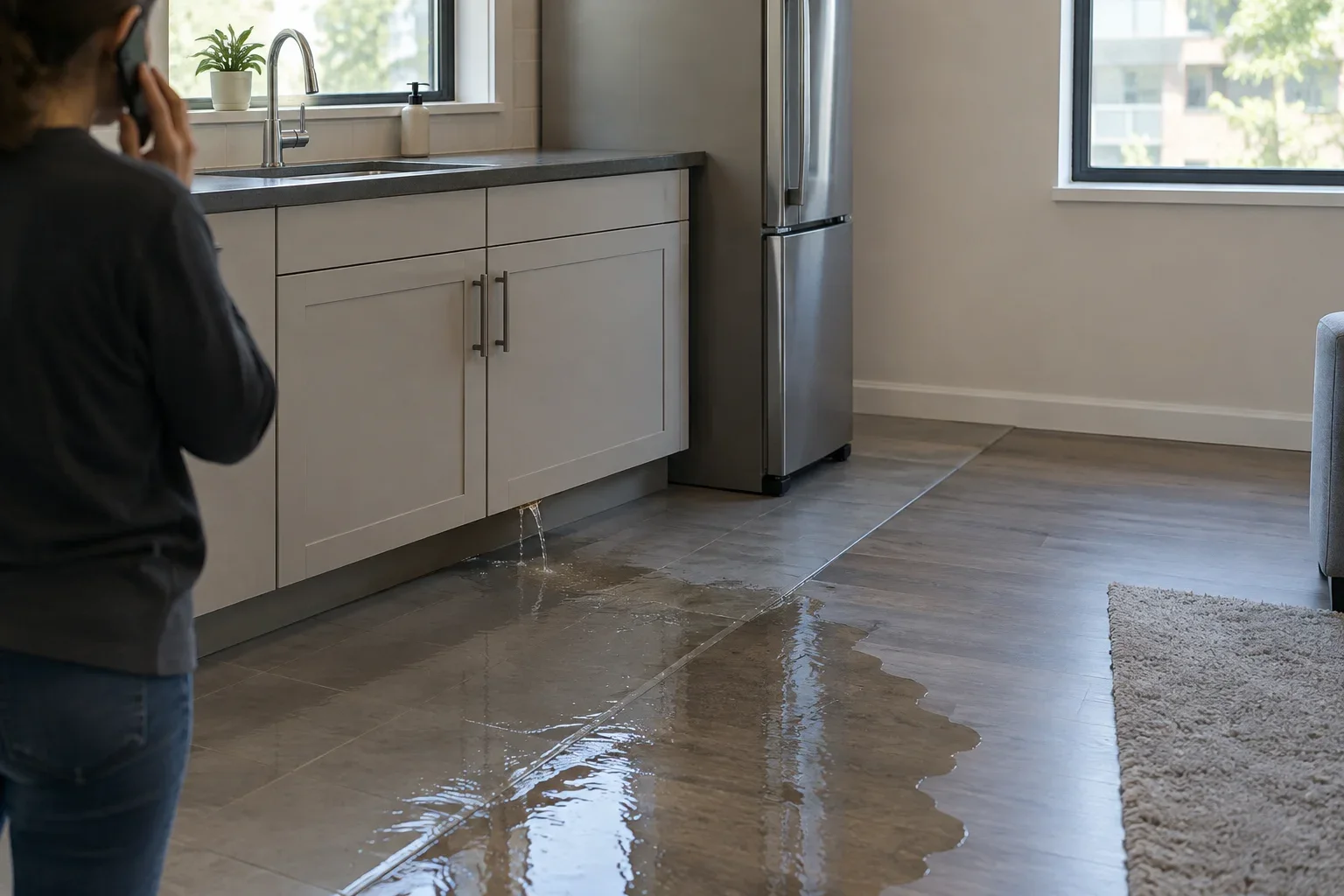
When water enters a rental, act in this order: protect people, stop the source only if it is safe, notify the owner or property manager, and arrange prompt professional assessment. Don’t wait to see whether a wet spot dries on its own. Water can spread behind walls, under flooring, and into nearby units, while electrical hazards or contaminated water can make cleanup unsafe. In Los Angeles and the San Fernando Valley, this guide focuses on responding to an active incident, not routine leak prevention or insurance coverage.
Take the First Steps Safely
If there is standing water near outlets or appliances, a sagging ceiling, a strong sewage odor, or any immediate danger, keep people away and contact emergency services or the appropriate utility when warranted. Do not step into water or touch wet electrical equipment. If you can reach a shutoff without entering a hazardous area, turn off the affected fixture or the unit’s water supply. If you cannot do so safely, wait for qualified help.
Once people are safe, report the problem right away using the property’s emergency contact or maintenance process. Include the address and unit number, when you noticed the water, the suspected source, which rooms are affected, whether water is still flowing, and any visible safety concerns. Send photos or video if safe to take them. A renter should not open walls, operate wet electrical equipment, or attempt repairs beyond a safe shutoff.
- Keep children, pets, and other residents out of the affected area.
- Move people and essential belongings away from active water if it is safe.
- Tell management if water may be entering another unit or a shared space.
- Do not use fans on water that may be contaminated, or where visible mold or unsafe conditions are present.
Assess What Is Wet and Where It Went
Stopping the visible leak is only the start. Water may travel through ceilings, wall cavities, cabinets, flooring, and shared plumbing chases. A professional assessment can help identify the source, map affected areas, check for moisture in concealed materials, and determine what can be dried versus what may need removal. Promptly arrange that assessment, especially when the source is unclear, water has spread beyond a small surface, or more than one unit is affected.
Tell the responder whether the water came from a clean supply line, rain intrusion, an appliance, a drain, or an unknown source. Water from sewage or other potentially contaminated sources requires extra caution and appropriate professional handling. Don’t assume a surface is dry because it looks dry, and don’t authorize cosmetic patching before affected materials have been assessed.
The U.S. Environmental Protection Agency advises drying water-damaged areas and items within 24 to 48 hours when possible to help prevent mold growth. Treat that as a prompt-response target, not a guarantee that mold will or won’t develop. The right drying plan depends on the source, materials, extent of damage, and conditions inside the building.
Coordinate Drying, Repairs, and Resident Updates
Owners or managers should assign one person to coordinate the plumber or other source repair, water-removal and drying work, and any follow-up trades. Ask the restoration professional to explain which areas and materials are affected, what equipment or removal work is planned, how progress will be checked, and what conditions must be met before reconstruction. For repair approvals, useful questions to ask before approving a rental property repair include the scope, cost, schedule, access needs, and whether additional damage could change the estimate.
Keep residents informed in plain language. Confirm when workers are expected, what rooms or utilities may be unavailable, how to report new moisture or odors, and whom to contact after hours. If the unit may not be safe or usable, assess the situation promptly and consult qualified professionals about appropriate next steps. Avoid promising a completion date until the source is fixed, the area is dry, and repair work can be scheduled.
For drying, professionals may use extraction equipment, dehumidifiers, and air movers when conditions allow. Follow their guidance about access, equipment, and keeping clear of work areas. Wet carpet, drywall, insulation, cabinets, or flooring can require different treatment; the material, contamination, and how long it stayed wet all matter. Don’t cover damp materials with paint or new flooring.
Document the Timeline and Confirm Completion
Keep a single incident record from the first report through the final repair. Record when the issue was discovered and reported, who was contacted, when the source was stopped, inspection findings, work performed, materials removed or replaced, resident updates, and follow-up observations. Save photos, work orders, estimates, invoices, and written approvals. A simple property recordkeeping system can help keep repair documents organized beyond the immediate response.
Before closing the work order, confirm that the source has been repaired, affected areas have been assessed and dried, and required restoration and reconstruction are complete. Ask the contractor or restoration professional what follow-up is recommended, and record any remaining work or monitoring. If a resident reports renewed dampness, staining, odor, or other concerns, treat it as a new report and arrange a timely reassessment.
This is a practical response checklist, not a determination of legal duties or insurance coverage. For those questions, consult the relevant qualified professional. The next step is straightforward: report the damage, make the area safe, and get the right person assessing it promptly.