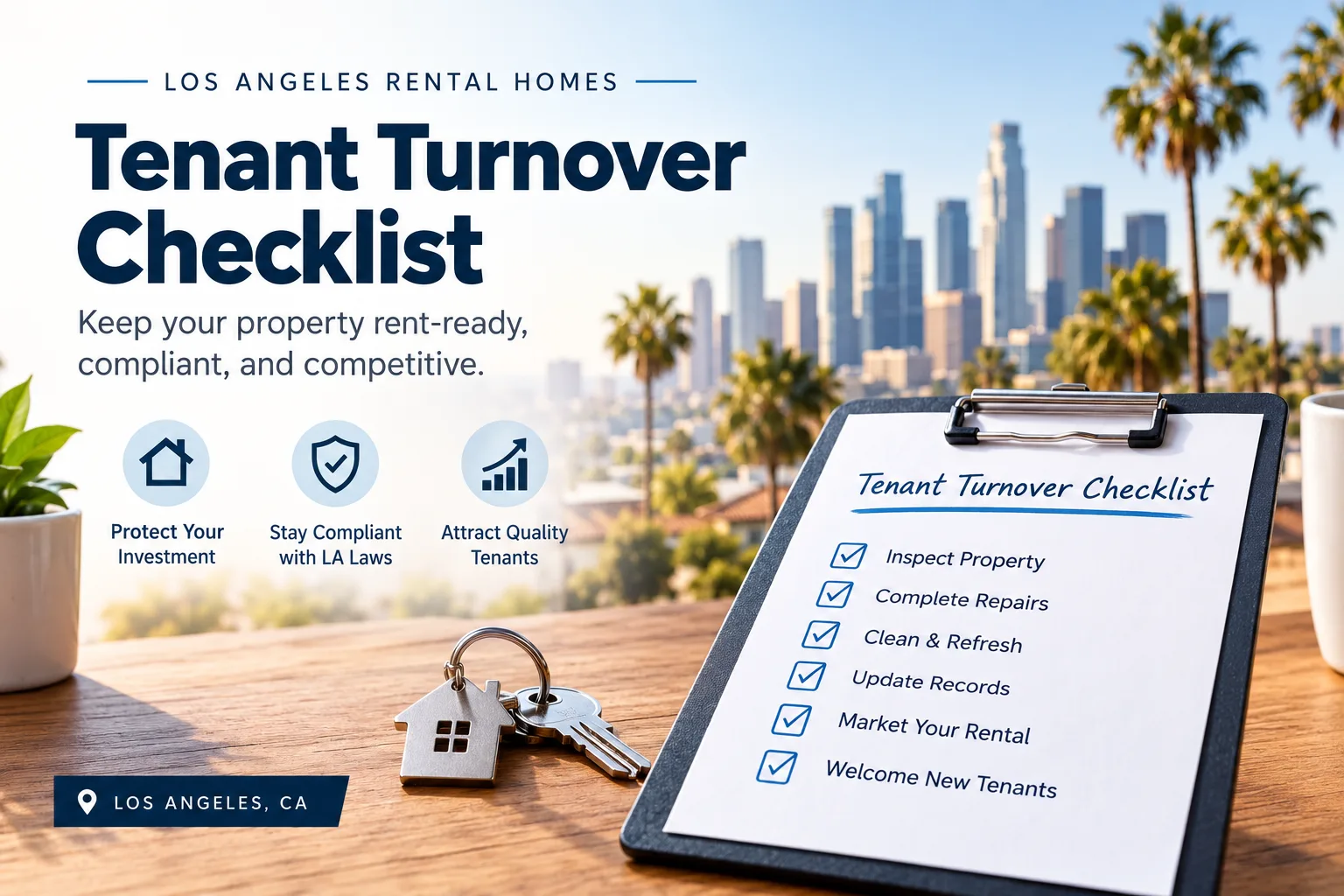
If you want fewer vacancy days and fewer security deposit disputes in Los Angeles, your turnover process needs more than a “clean and repaint.” It needs a timeline, inspection windows, and documentation that supports any lawful deductions. Use this checklist as your plan for the next vacancy, so you’re ready before the unit is empty.
1) Pre-key handoff planning (Day 0 to Day 2)
Start before move-out day. The goal is to prevent “unknown damage” and build a clean evidence trail you can reference later.
Day 0: Confirm the move-out details and schedule
- Lock the exit date and time window with the tenant, and document the agreed plan in writing.
- Confirm utilities status so you know who is responsible and when services will be disconnected or transferred.
- Set your inspection plan: initial condition review, cleaning/repair verification, and the final walk-through.
- Assign one internal owner contact to collect updates from cleaning, maintenance, and vendors.
Day 1: Create the “to-document” list
- Prepare a room-by-room checklist covering entry, living areas, kitchen, bathrooms, bedrooms, closets, windows, and included appliances.
- Define pass/fail for safety and habitability (for example, functioning smoke alarms, no active leaks, working locks, and operable plumbing fixtures).
- Queue urgent work that can delay leasing, such as plumbing shutoff repairs, non-functioning HVAC for the season, or missing safety items.
Day 2: Verify access and entry rules
- If you will inspect before the unit is fully vacant, get written tenant agreement or coordinate scheduling to avoid access disputes.
- If you plan a pre-vacate or initial inspection, ensure your process aligns with California security deposit inspection and notice requirements. The legal framework is primarily addressed in California Civil Code 1950.5.
2) Cleaning and repair window (Day 3 to Day 7)
This phase is where turnovers succeed or stall. Your job isn’t just fixing items; it’s building a defensible record that separates normal wear from tenant-caused damage and supports any lawful deductions.
Day 3: First pass after move-out (before contractors begin)
- Do a structured condition review and note obvious issues: staining, odors, broken hardware, chipped paint, damaged flooring, and missing items.
- Start a single job folder for the unit: photos, inspection notes, vendor estimates, invoices, and receipts.
- Begin cleaning promptly, but flag safety items and urgent issues before work turns into “cosmetic masking.”
Day 4 to Day 6: Targeted repairs with vendor documentation
- Prioritize repairs that impact leasing: plumbing, electrical, locks, windows, and HVAC performance.
- Ask vendors for itemized invoices that match what you intend to document for security deposit purposes.
- If doing paint or flooring work, document the scope and why it’s needed, avoid blanket replacements without justification.
Day 7: “Ready for showing” inspection
- Walk the unit after cleaning and repairs. Confirm everything is operational and remove small blockers that stop showings (missing caulk, misaligned cabinets, non-working blinds).
- Use the checklist to ensure each room is complete before marketing begins.
3) Inspection windows that prevent deposit disputes
Turnover failures often come from timing issues and documentation gaps. California requires landlords to provide an itemized statement and return any remaining portion of the security deposit within 21 calendar days after the tenant vacates, including the basis for any deductions. Your inspection schedule needs to be early enough to compile supporting records and make decisions with confidence.
What to verify during inspections
- Safety and habitability: smoke/CO alarms, functioning plumbing, and locks.
- Condition at move-out: identify tenant-caused damage versus ordinary wear, and note the exact locations.
- Cleaning quality: confirm removal of debris, hair, spills/stains, and residue on counters and fixtures.
- Appliances and included items: verify operation and check for missing components.
- Odors: locate the source area so remediation is targeted and properly documented.
Practical “inspection-to-deposit” rule
If an issue could affect a security deposit decision, identify it during your inspection window and support it with evidence from the unit folder. This keeps your deduction narrative consistent with what you can show.
4) Final walk-through and owner paperwork (Day 8 to Day 12)
This is where turnovers become either smooth lease starts or messy disputes. Close the loop while details are still fresh and paperwork is still easy to obtain.
Day 8: Final walk-through with a standardized report
- Use your room-by-room checklist for the final pass.
- Confirm repairs are complete and billed in a way that matches what was actually done.
- Flag missing documentation early so you can request it from vendors immediately.
Day 9 to Day 12: Owner reporting and deposit decision prep
- Compile a turnover summary for the owner: vacancy timeline, cleaning/repair scope, and the expected leasing readiness date.
- Draft the security deposit itemization early so it’s reviewable before the legal deadline. California requires an itemized statement showing the basis and amount of any security received and returning remaining amounts within 21 calendar days after the tenant vacates.
- Keep any rent or deposit-related communications factual and tied to inspection evidence.
5) What Los Angeles owners and renters should do next
For owners and investors: adopt this workflow as your internal standard. Build the evidence folder every time, even when you expect full deposit return, and set calendar reminders that trigger your 21-day review well in advance.
For renters and exiting tenants: treat move-out like a handoff. Keep contact information accurate, coordinate access for any agreed inspections, and document your own condition notes. If you disagree with deductions, the itemized statement process is the starting point for resolving disputes.
If you want a management partner who can run a consistent, documentation-forward turnover for Los Angeles rentals, review Suave Management’s residential services and how we handle compliance-minded workflows: /services/residential.
To support a faster leasing start for the next tenant, you can also discuss your unit’s readiness criteria with our team under our broader Property Management Los Angeles overview: /.
Finally, if you’re building a repeatable repair pipeline to support turnover speed, connect your turnover plan to your renter repair request workflow so maintenance is scheduled efficiently: /.
Educational note: This checklist is for property management planning. Security deposit requirements and inspection rules can be technical and fact-specific. Consider consulting a qualified California attorney or qualified local housing compliance professional for guidance on specific situations.