To prepare a rental roof for seasonal rain, arrange an assessment early enough to review the findings, approve needed work, and schedule repairs before the first major storm. Ask a qualified roofing professional for dated photos, specific observations, and a written explanation of what needs attention now versus what can be monitored. Then coordinate access, compare estimates by scope, and keep the inspection report and repair records together.
Book the assessment and coordinate access
Set an inspection reminder before the rainy season rather than waiting for a leak. If the property has several buildings, additions, or different roof sections, identify them in advance so the professional can document each area clearly. Share any known history, including past leaks, prior repairs, recurring stains, or drainage problems.
For an occupied rental, agree on an access plan before confirming the appointment. Tell residents the proposed date and expected work area, confirm how the professional will enter, and ask them to report interior water stains or damp areas. Do not ask residents to climb onto the roof or inspect steep, fragile, or otherwise unsafe areas themselves.
If you are planning rental property maintenance in Los Angeles, assign one person to coordinate the appointment, resident communication, owner approvals, and follow-up. A property manager can help keep those steps organized; Suave Management describes its residential property management services for owners seeking that support.
Ask for useful observations, not just a general opinion
Clarify that the goal is a documented assessment, not an automatic recommendation to replace the entire roof. Ask the professional to identify the roof sections inspected, note any areas that were inaccessible, and provide photographs that show the location and condition of each concern.
Useful observations may include:
- Flashing and penetrations: Note lifted, separated, corroded, or damaged flashing near chimneys, vents, skylights, walls, and other roof openings.
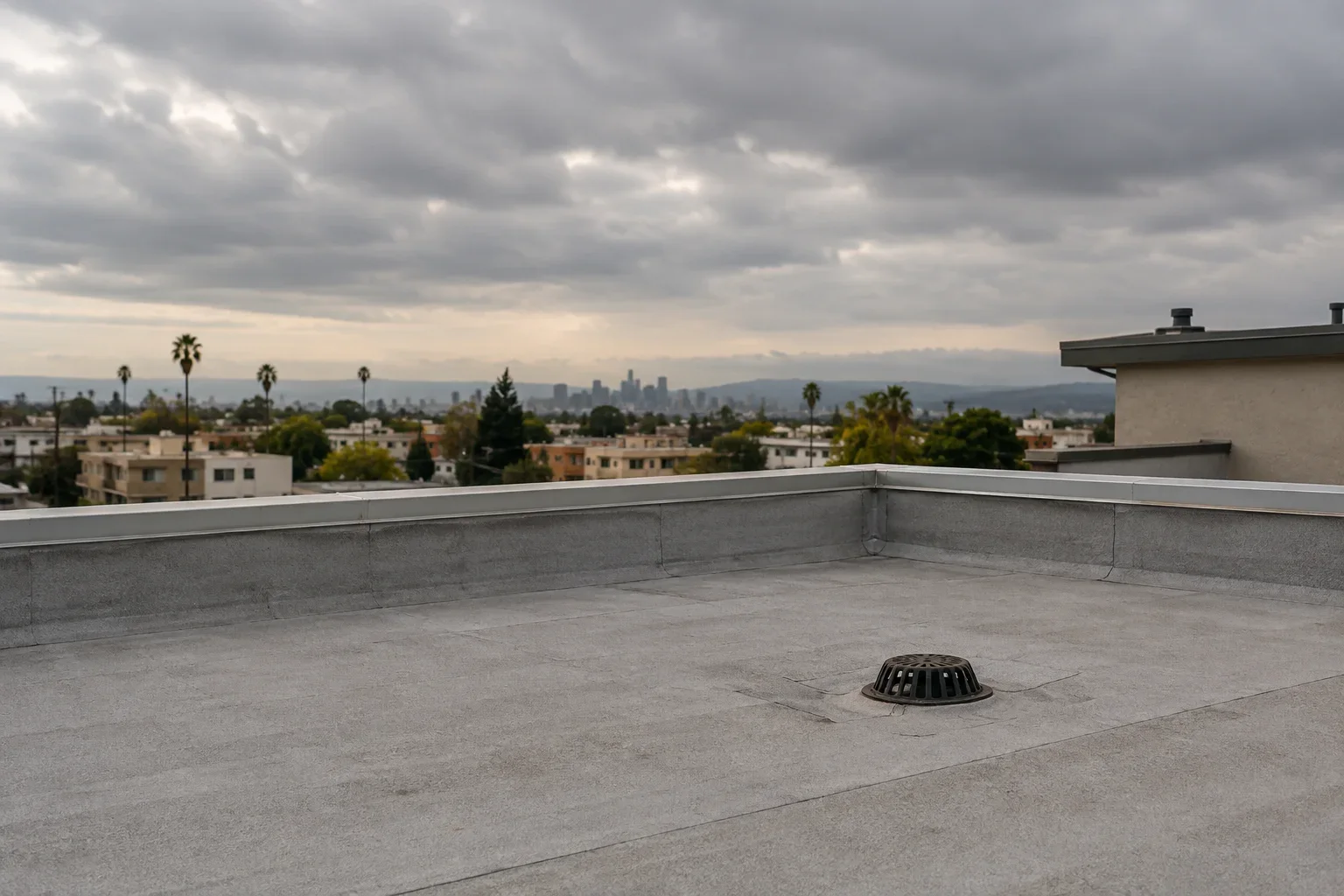
- Drainage: Identify blocked roof drains, gutters, downspouts, scuppers, or visible debris that could interfere with water flow. Ask whether any low spots or areas of standing water need further evaluation.
- Roof materials: Document cracked, loose, missing, brittle, or visibly worn materials, along with exposed underlayment or deteriorated sealant.
- Related evidence: Record signs that may indicate water entry, such as staining or damaged finishes inside. Treat these as observations to investigate, not proof of a particular cause.
Ask the professional to distinguish a visible condition from a confirmed leak source. Roof inspections are limited by safe access and what can be observed on the inspection date, so a report should say when additional testing or evaluation is recommended.
Prioritize findings by urgency and consequence
Request a written list that separates immediate concerns from planned maintenance and longer-term monitoring. A damaged flashing detail or an active leak may need prompt attention. Blocked drainage may call for timely clearing, especially when the next rain is near. Worn materials without evidence of current water entry may warrant a repair plan or follow-up assessment, depending on the professional’s findings.
Use the report to make decisions, not to assume every item has the same urgency. Ask:
- Could this condition allow water to enter before the next scheduled review?
- Is the recommended step a repair, cleaning, further diagnosis, or replacement?
- What could happen if the work waits, and what signs should residents report meanwhile?
- Does the recommendation address the documented location and cause, or is more inspection needed?
If water is entering the home, treat it as an active maintenance issue. Arrange appropriate evaluation and protect affected areas while avoiding unsafe roof access. A roofing professional can advise on the roof work; consult qualified legal, insurance, or building professionals when a situation raises questions beyond the assessment.
Review estimates and schedule the work
For significant repairs, compare written estimates on the same scope. Check whether each proposal identifies the roof area, materials, preparation, cleanup, exclusions, and any follow-up inspection. Ask the contractor to explain differences in proposed work rather than choosing on price alone. Confirm the expected schedule and how weather delays or newly discovered conditions will be handled.
Before hiring, check the contractor’s California license status and ask about insurance coverage. The Contractors State License Board provides an online license-check tool and guidance for comparing written bids. For substantial work, get the agreement and scope in writing, and consult a qualified professional if you are unsure about contract terms or permit requirements.
Schedule repairs with enough time for approval, materials, resident access, and weather-related changes. Confirm who will notify residents, who will meet the crew if needed, and who will verify completion. If the professional recommends temporary protective measures, ask what they involve and how quickly permanent follow-up should occur.
Keep a simple roof record
Save the dated inspection report, photos, estimates, approvals, invoices, and completion notes together. Record which roof section each item concerns, the date work was completed, and any recommended monitoring or next review. This gives owners and managers a useful reference when reviewing future bids or investigating a later leak.
After the work, ask for photos or a completion note showing what was addressed and whether any recommended items remain open. Share relevant maintenance instructions with residents, including how to report new staining or water entry. A consistent record turns a one-time inspection into a practical plan for follow-up.