A useful defensible-space plan turns wildfire upkeep into a repeatable property routine: check local requirements, inspect the areas around buildings, assign work to qualified vendors, coordinate access, and save proof of completion. For California rentals near vegetation, start with the property’s location and any inspection notices. Do not assume one clearance distance or landscaping rule applies to every parcel.
Start With the Property’s Requirements
Confirm which agency serves the property and whether the parcel is in a designated fire hazard area. Check the current guidance from the local fire department or fire protection district, then review any fire-agency notice, approved vegetation plan, permit conditions, or other property-specific instruction. Owners in Los Angeles County should also confirm which agency has jurisdiction; city and county responsibilities can differ.
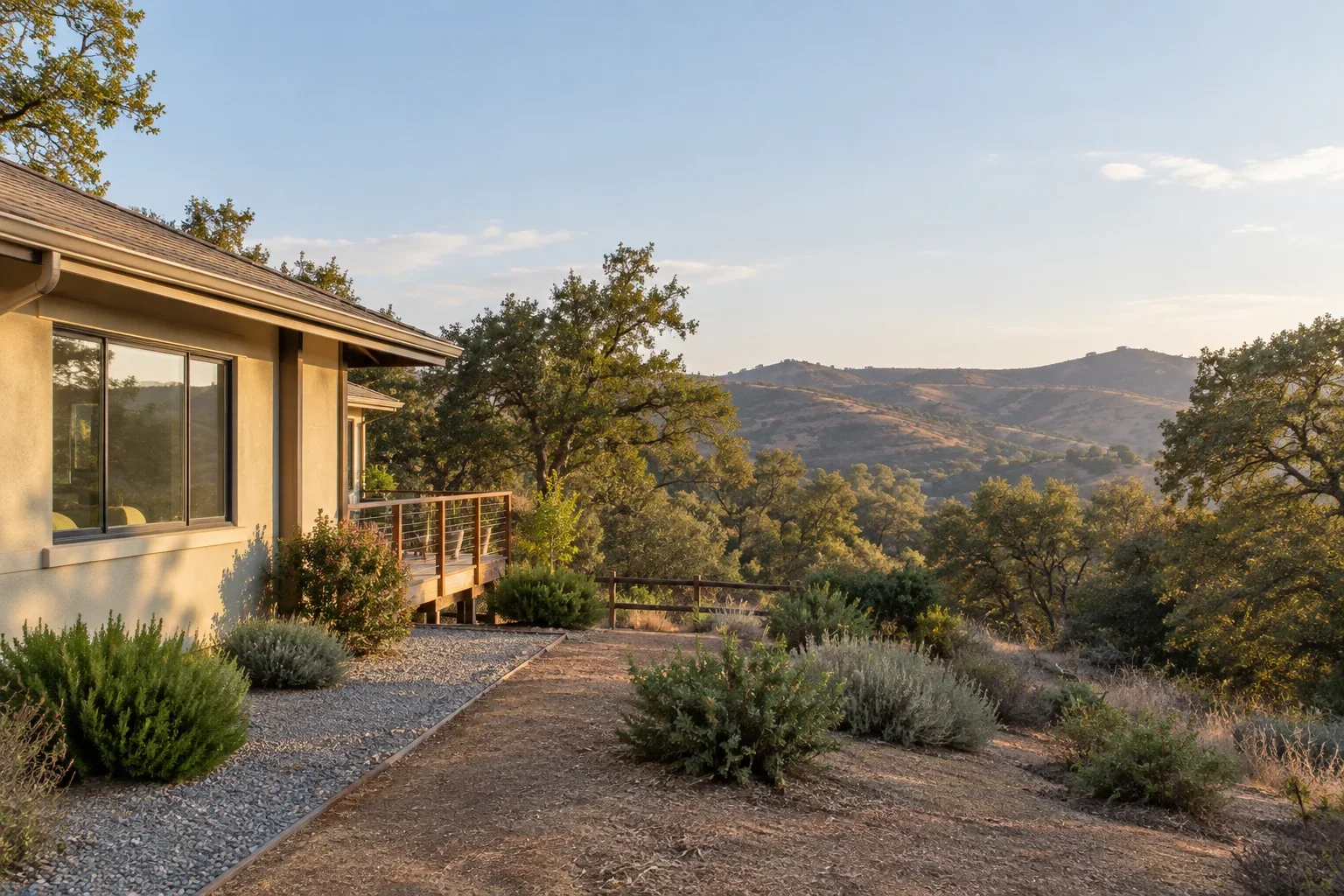
State guidance describes defensible space in zones and notes that local agencies may set stricter standards. Zone descriptions can help organize a walkthrough, but they are not a substitute for checking the rules that apply to the address. As of October 7, 2026, California’s Board of Forestry says its Zone 0 regulations are still undergoing final review. Check the Board’s current updates before treating a proposed or recently issued requirement as final.
Inspect and Prioritize the Work
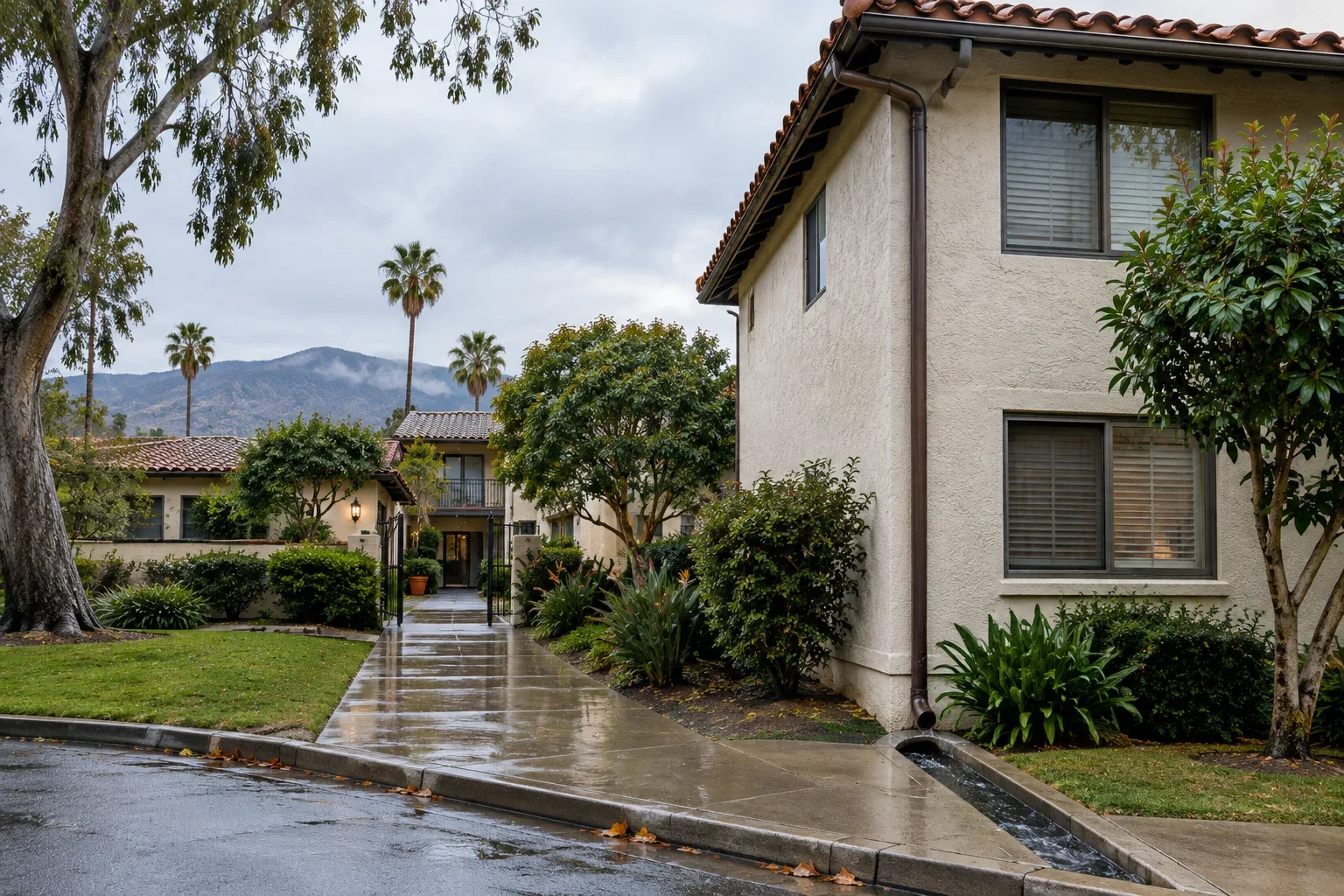
Walk the exterior and shared areas, or arrange for a qualified person to do it. Review the roofline, gutters, decks, stairs, fences attached to the building, planting beds, slopes, and vegetation near outbuildings. Look for dead or dry growth, accumulated leaves and needles, overhanging branches, and combustible items close to structures. Note access paths and any features that could need specialist attention.
Record each concern by location, describe what needs attention, and take dated photos from consistent viewpoints. Separate routine cleanup from work that calls for an arborist, licensed contractor, or agency approval. Avoid directing unqualified workers to remove large branches or trees, use power equipment in dry or windy conditions, or cut protected vegetation without checking applicable requirements.
Make a simple work list:
- Urgent: Items identified in an official notice or an immediate hazard that needs prompt professional review.
- Scheduled: Dead vegetation, debris, or pruning identified during the walkthrough.
- Monitor: Areas to recheck because vegetation grows back or seasonal conditions change.
Schedule Qualified Vendors and Coordinate Access
Ask vendors to confirm their scope in writing, including the specific areas, work method, debris removal, expected timing, and whether permits or agency coordination may be needed. For tree work or unfamiliar plants, ask whether a tree-care professional or other specialist should assess the site before cutting. Share relevant inspection instructions with the vendor, but do not ask them to interpret unclear legal requirements on the owner’s behalf.
For occupied rentals, give residents clear notice of the work area, timing, expected noise, and any steps they need to take, such as moving patio items or keeping pets inside. If vendor work requires entry into a dwelling, follow California’s landlord-entry requirements, including applicable notice and timing rules. Exterior work may not require entry into the unit, but residents still benefit from advance coordination and a clear contact for questions.
Plan recurring maintenance around the property’s conditions and any local deadlines, rather than relying on a single annual visit. A seasonal inspection routine can help owners catch regrowth and exterior maintenance needs before they become urgent. For more ideas on setting a recurring schedule, see this seasonal inspection calendar for Los Angeles rentals.
Document Work and Close the Loop
Keep a property file with the applicable agency guidance, notices, inspection reports, vendor proposals, approvals, invoices, and tenant communications. After the work, save dated before-and-after photos and the vendor’s completion note. If an agency issued a notice, record the deadline and follow its instructions for reporting completion or requesting a reinspection. If work could not be completed as scheduled, document why and promptly contact the agency or a qualified professional for next steps.
This record helps owners track recurring tasks and explain what was done, when, and by whom. It does not by itself establish compliance, so keep checking for updated agency instructions and address-specific requirements. When rules, tree work, or tenant-entry questions are unclear, consult the relevant fire agency and an appropriately qualified legal or landscape professional.
A Simple Plan to Put in Place
- Verify the parcel’s jurisdiction, hazard status, and current requirements.
- Complete and photograph a property-specific exterior walkthrough.
- Prioritize issues, then schedule appropriately qualified vendors.
- Coordinate tenant communication and lawful access before work begins.
- Save completion records and set a date for the next review.
For owners who want help coordinating recurring upkeep and resident communication, Suave Management’s residential property management services provide a relevant place to learn about the company’s management scope.